Kingsford Charcoal Chimney Starter Review: Ditch the Lighter Fluid or Not?
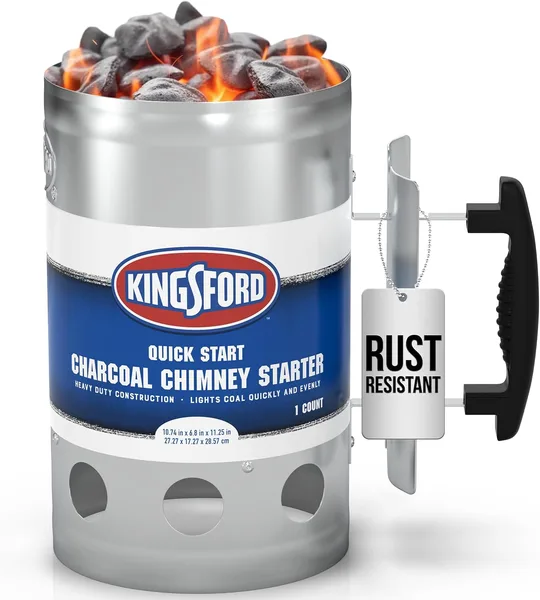
A galvanized-steel cylinder: newspaper goes in the bottom chamber, charcoal on top, and 15-20 minutes later you've got evenly lit coals with zero whiff of lighter fluid on your steak. Worth buying if you've ever cursed at a lump of charcoal that refused to catch; skip it if you're running a gas grill or genuinely don't care about that faint "chemical" aftertaste in your food.
There was this one Saturday I spent thirty minutes dousing a pile of charcoal in lighter fluid, striking match after match, muttering under my breath, while my guests sat there with empty plates dropping not-so-subtle "so... when do we eat" hints. Sound familiar? The charcoal wasn't the problem — it never is. The problem is that the classic lighting method is basically a lottery involving wind, drafts, and however much fluid you dump in "just to be safe." And then the first batch of meat tastes faintly like a gas station.
A chimney starter fixes this in a way that's almost annoyingly simple — you start wondering why everyone isn't already using one. It's a cylinder with two chambers: a grate and air vents at the bottom where you stuff crumpled newspaper, and a larger chamber on top where the charcoal sits. Light the paper from below, the chimney effect pulls the flame straight up through the coals evenly, and the charcoal lights itself — no gasoline, no "lighter fluid that tastes like childhood," no dancing around the grill waving a fan.
What it's actually like, not the marketing version
The first thing you notice is that this Kingsford starter is made from galvanized steel that's noticeably thicker than the bargain-bin versions from the hardware store. That's not a small detail — thin steel on cheap knockoffs starts warping after a couple of seasons of constant heat cycling, the handle loosens up, and the bottom, which sits right against 400°F-plus flames every single time, rusts and buckles. The galvanized coating here acts like armor, holding its shape through heat-cool cycle after heat-cool cycle.
The capacity is generous, so one load holds enough charcoal for a proper cookout with friends rather than a sad little pile good for two skewers. That's a real difference when you're not just grilling for yourself but hosting a backyard crowd — no need to light a second batch halfway through. The handle comes in either wood or a heat-resistant coating depending on the batch, and you can grip the hot cylinder confidently without feeling like you're about to get burned through your glove.
Compared to the old "charcoal plus fluid plus match" routine, the difference shows up on the very first bite — there's none of that faint chemical taste that lingers no matter how long you wait for the fluid to "burn off." And compared to electric charcoal starters (the ones with a heating coil) — this thing doesn't need an outlet or batteries, so it works anywhere, whether you're at a cabin with no power or out in the woods. There's one genuine downside, and it's mildly annoying: you need paper fuel for the bottom chamber — newspaper, napkins, cardboard — so it's not quite a zero-prep, one-step process. People used to just splashing on fluid and tossing a match grumble about this extra step at first.
One thing barely anyone mentions: the charcoal lights evenly from top to bottom inside the chimney, so by the time you dump it onto the grate it's already good to go — ashy gray on the outside, glowing hot inside — and you can start cooking immediately instead of waiting another ten minutes for the rest to catch. That saves real time, especially when your guests are hungry and patience is running thin.
Who should buy it, and who shouldn't bother
If you've got a charcoal grill or a basic barbecue setup and have ever reached for lighter fluid, just buy this — don't overthink it. It's one of those rare accessories that genuinely changes how you cook rather than sitting in the garage as one more gadget you forgot about. It's especially worth it if you grill often: weekend cookouts all summer, a barbecue most weeks — the starter pays for itself within a couple of uses, since lighter fluid isn't free either, and the seasonal total adds up more than people expect.
Skip it if you've got a gas or electric grill — there's nothing to light, so the starter is just dead weight. Same goes if you fire up charcoal once a year on some camping trip and genuinely couldn't care less about the taste of lighter fluid — paying extra for a dedicated device isn't worth it when the classic method does the job fine. One more thing to factor in: it needs somewhere to live, it doesn't fold flat or tuck into a drawer — for a small apartment with no balcony or storage space, that's one more bulky item you have to find a home for between grilling seasons.
This one runs around $12, so it's less an investment and more an impulse buy that pays for itself the very first weekend you use it. Once you add forwarding and your country's import duty, the landed price naturally comes out higher — dede.sh shows the full item-plus-forwarding-plus-duty total for your specific country, so check that before you decide.
FAQ
FAQ
Yes, and that's the whole point of buying one. The only fuel you need is crumpled paper or cardboard in the bottom chamber. No gasoline, no kerosene, no special fluid — the charcoal lights purely from airflow and the heat of the burning paper.
About 15-20 minutes to fully glowing coals — faster than the classic fluid method, where you also have to wait for the chemical fumes to burn off before you can put meat anywhere near it.
Yes, but it's really the thickness of the metal, not just the galvanizing itself, that determines whether the bottom warps after a hundred heat cycles. Thin, cheap versions deform much faster.
For one medium-sized grill, yes — the capacity is built for a full load of charcoal, not just enough for a couple of skewers. For a really big cookout you might need to light it twice.
Looking for more to round out a weekend at the grill? Check out