Bright Starts Oball Classic review: is the grip ball worth buying for a newborn
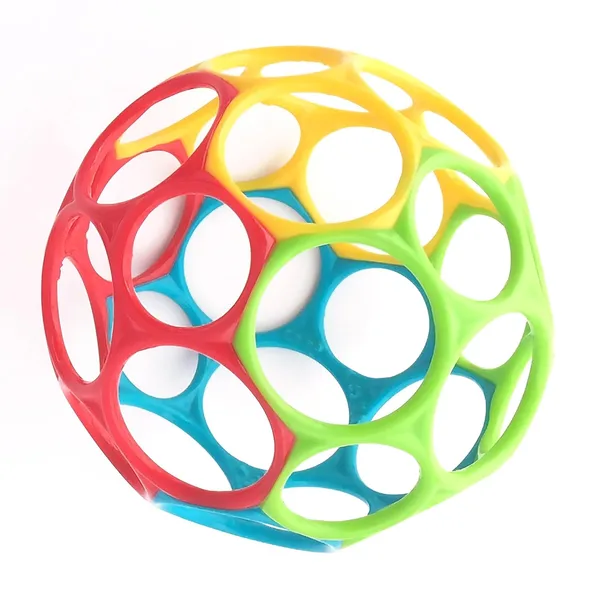
The Oball Classic isn't a toy stuffed with "features" — it's just a shape that was very deliberately worked out: a lattice ball that's equally easy to grab with a palm, an elbow, or a nearly toothless mouth. It costs next to nothing, it rarely breaks, and it's bought so often it has basically become the unofficial default "first toy" for baby showers. There's one real downside — babies tend to outgrow it around eight months, once they want something more complex. But for the first six months or so, it earns its keep completely.
Some products look so simple you wonder how anyone makes money on them. A ball with holes in it — how hard can that be? You take a sphere, punch some holes, done. But hand a newborn a plain smooth ball and watch what happens. Nothing. Tiny fingers can't yet wrap around a round, slick surface, and the grasp reflex in those first months doesn't work the way most of us assume. That's where the Oball Easy Grasp Classic comes in — the toy that gets handed out at maternity wards and baby showers so often it's practically a required line item on the "first layette" checklist.
The trick isn't the Bright Starts branding or clever marketing — it's the geometry. The ball is built from interwoven flexible ribs that form large openings all across its surface. That means it barely matters how a baby tries to grab it — fist, two fingers, pressed against the body, hooked over a wrist — some part of a hand will find a rib to latch onto. To an adult, that sounds trivial. To a three-month-old whose fine motor skills are still coming online, it's the difference between "got it!" and another minute of frustrated crying.
How it actually plays out
For the first few weeks, a baby just holds the ball and shakes it — there's no rattle inside, just a soft plastic rustle and a pleasant texture. Around four months, the real magic starts: babies learn to pass the toy from hand to hand, and the open lattice lets them do it clumsily without dropping it on the floor every single time. Parents who bought a regular rubber ball before switching to the Oball often admit the old one just sat in the toy basket, because their baby simply couldn't hold onto it for more than a second. This one is different.
Closer to six months, once unsupported sitting kicks in, the ball turns into ammunition for the first attempts at throwing and rolling. The lightweight plastic doesn't hurt when it hits your face (and it will — trust us), and it doesn't leave marks on furniture or floors. It also works well in the bath: water drains straight through the holes, so mildew doesn't build up inside, which is genuinely rare for bath toys.
Compared with classic teethers like Sophie la Girafe, the Oball is simpler and cheaper, but more versatile — it's not a chew toy, it's the first "athletic" object babies use to learn hand coordination. Compared with soft fabric balls, the ribs hold their shape even when a baby yanks them in every direction, and it's far easier to disinfect — just wipe it down or toss it in the sink.
Where it genuinely falls short
Honestly — past eight or nine months, once a baby wants to manipulate objects in more complex ways than just squeezing and throwing, the Oball quickly fades into the background. It doesn't grow with the child the way a building-block set or a shape sorter does; it's strictly a seasonal toy. Another thing that annoys some parents: the color you get may not match the photo (this comes as a set of four — red, yellow, green, blue — sold together, not individually). And yes, the holes collect dust and crumbs, so you'll want to wipe it down weekly, even though the open design makes rinsing it under a tap easy enough.
The BPA-free plastic isn't just a marketing checkbox here — for a toy that spends its first few months of life in a baby's mouth, that actually matters, and it's a big part of why Bright Starts has the reputation it does in the baby-gear market. This is a genuinely cheap item on the marketplace, the kind of thing worth ordering alongside something else rather than on its own — check the full landed price to your country on dede.sh (item, forwarding and import duty combined into one number) and you'll usually find it's a near-free add-on inside a bigger order.
Who should buy it, and who shouldn't
If you or someone close to you has a baby on the way, buy it without overthinking — this is the rare case where a "universal gift" really is universal, not just an easy cop-out. If the baby is already a year old or more, skip it — they've outgrown it and will be unimpressed. And if you're after something with a long service life that "grows with the kid," look elsewhere too — the whole philosophy here is different: cheap, simple, and it does its job for exactly as long as it needs to and no longer.
FAQ
Yes — the openings in the Oball are specifically sized so fingers don't get stuck, something borne out by years of sales and millions of parent reviews worldwide. The flexible plastic also flexes under pressure rather than pinching.
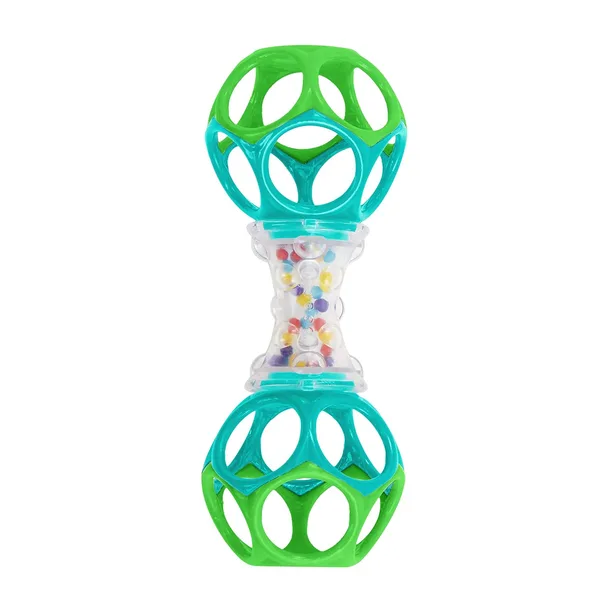
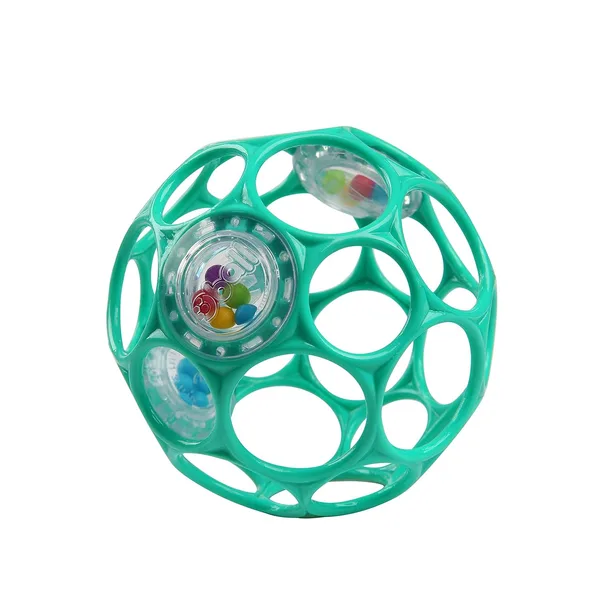
If your baby is under three months old, yes — a rattle or shaker version is more engaging, since it adds sound and reacts to movement. The classic, sound-free version is more purely tactile and suits slightly older babies who are already grasping with intent.
One ball fully covers the basic need for the first few months. But since it's so cheap and babies love bright colors, plenty of parents grab two or three at once — scattered around the room, they cut down on "where's my toy" meltdowns.
Fabric balls are softer and safer to have near a sleeping baby, but the Oball wins on grasp-reflex and motor development — it's genuinely easier to hold. Go with the Oball for active daytime play, and the fabric ball for settling a baby down to sleep.