Cliganic Mosquito Repellent Bracelets (10-Pack): Do They Actually Work
Cliganic bracelets aren't a mosquito cure-all — they're a quick, cheap workaround for when the spray runs out or your kid flat-out refuses to be "smeared with something." They work in a calm, windless backyard and are nearly useless while fishing or hiking with a backpack. Grab a 10-pack, hand them out to the family, and don't expect a miracle.
Summer, a backyard evening, Friday night. You finally sit down on the porch with your tea, and a minute later you hear that familiar whine near your ear. Mosquitoes have been especially bold lately, and anyone who's ever tried to spray a squirming toddler knows exactly what that fight costs you. That's where bracelets come in — small, supposedly safe, supposedly chemical-free. I bought a pack of Cliganic out of pure exhaustion: tired of fumbling with spray cans just to step into the garden for ten minutes.
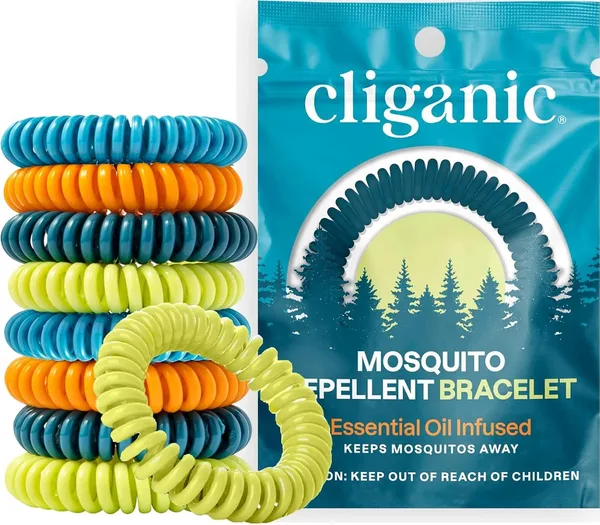
First impressions were fine. Ten bracelets in the pack, each individually sealed, smelling of citronella, eucalyptus, and some herbal blend — pleasant enough, not chemical-smelling. You slip it onto your wrist, the size adjusts, fits an adult or a kid as young as three. No DEET, and honestly, that's the main reason people buy these in the first place: when a child is sick, allergic, or just very young, parents are (rightfully) wary of repellents containing DEET.
Now for how it actually performs. In an enclosed, windless yard, the bracelet keeps mosquitoes at a distance of roughly half a meter to a meter — enough that they won't land specifically on your hand or leg near the wrist. But the moment the slightest breeze picks up, or you move a couple of steps away, the effect just vanishes. The mosquito bites your calf, your neck, anywhere except where the bracelet sits. That's just the physics of scent — essential oils don't create a cloud around your whole body, they work locally and briefly.
Compared with a DEET-based or picaridin spray, the difference is immediate. Spray covers the skin evenly, so mosquitoes don't bite at all until it wears off (several hours). A bracelet is more of a "maybe you'll get lucky" situation. Honestly, while fishing or in the woods at dusk, I don't trust it at all — there are simply too many mosquitoes there, and localized protection gets swamped. But on a balcony, at a neighborhood playground, or just sitting on a lounge chair reading a book, it's a perfectly workable option, especially for anyone who avoids chemicals on their skin altogether.
The scent lasts roughly twelve to fifteen hours of active effect, according to the packaging, and that tracks — by the end of the second day, the smell is barely noticeable, and the effect fades along with it. So one 10-pack of Cliganic bracelets isn't meant to cover an entire summer — more like a handful of backyard trips or a week of evenings on the patio if you wear one daily. For a family with two kids, a pack disappears faster than you'd like.
The price on Amazon starts around $0.90 — so the item itself is dirt cheap, and even after shipping and import charges to your own country, this is never a "pricey" story. That's the real argument in its favor: if it doesn't work, or your kid rips it off in five minutes, the loss is minimal. Compared to something like the OFF! Clip-On, which costs significantly more and needs batteries and refill cartridges, Cliganic looks like the budget, no-fuss option — though the functionality is genuinely different too; a Clip-On actually pushes a scent cloud around you with a fan, rather than just smelling nice on your wrist.
The bracelet material is a braided silicone cord, sturdy enough that it doesn't tear even when a kid yanks on it. The clasp is simple, with no magnets or fasteners that get lost. On the downside: wear it several days straight in the heat, and the skin underneath can get a bit red — not an allergy, more just moisture and friction. Take it off at night and let your wrist breathe.
Who does this actually suit? Parents of young kids who are terrified of chemical repellents and are willing to accept incomplete protection for peace of mind. People stepping out "for a minute" onto the balcony or into the garden who don't want to reapply spray every time. Anyone heading to a city park picnic where mosquitoes are moderate, not swarming. But hikers, anglers, and anyone heading into the woods or by a river for a full day are better off with a proper DEET or picaridin repellent, keeping the bracelet as a backup in a backpack pocket.
The main trade-off here is an honest one: you pay a low price and get chemical-free safety — in exchange for effectiveness and consistent protection. The second issue is less obvious — the scent, while pleasant, isn't for everyone; some people report headaches from wearing several bracelets at once (say, one on each wrist). One bracelet per person is fine; two or three is just too much fragrance.
If you're packing for the season, alongside the bracelets it's also worth grabbing a decent outdoor cooking setup and something for cold drinks — more on that below.
FAQ
Yes, significantly. DEET spray covers your entire skin and works evenly for hours, while a bracelet only acts locally around your wrist. If you're heading into the woods for a full day, a bracelet isn't a lifesaver — it's a supplement at best.
Yes, that's actually the main reason it's popular — no DEET, just essential oils. But take it off at night and watch for redness on the skin under the cord after a few days of wear.
Realistically about a day of active scent, then the effect fades. A 10-pack lasts a family roughly a week or two of regular use, not an entire summer.
For a hike, a spray or cream, no question — the coverage is even and lasts longer. Save the bracelet for the backyard, the porch, or a city park where mosquitoes are less intense.