Creality Wood Filament PLA Review: Does It Really Look and Smell Like Wood?
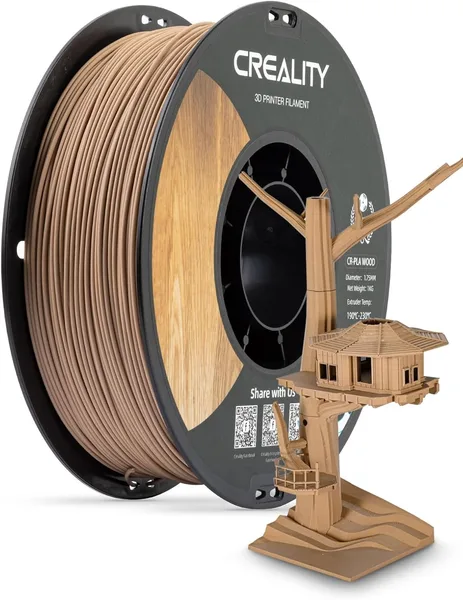
Creality's Wood PLA delivers a genuinely "wood-like" texture straight off the print, no sanding or painting needed, thanks to wood-flour blended into regular PLA. It prints easily on any FDM printer, smells like sawdust during extrusion, and loves clogging nozzles smaller than 0.4mm. If you want a decorative piece for a shelf or a gift, go for it without hesitation. If you need a sturdy functional part, this isn't the filament for that.
I recently printed a few chess pieces as a gift, and the moment I pulled a piece off the bed and it already felt like wood to the touch, not like yet another plastic trinket, that sold me completely. No post-processing, no "wood-effect" spray varnish. Just pull it off, clean up the strings, and now you're holding something you want to stroke rather than shove in a drawer.
What this material actually is
Creality's Wood Filament PLA isn't a separate type of plastic — it's regular PLA with fine wood-fiber particles mixed in. The technology isn't new; composite "wood" filaments have been made for years, but the quality of the blend and how evenly it's distributed is exactly where some brands do better than others. Creality got it right: the color has a warm, natural wood tone, without that synthetic "beige plastic pretending to be wood" look that cheaper alternatives suffer from. The silk texture works as a contrast here — the finished surface has a light silky sheen over the rough wood-grain structure, and it genuinely looks pricier than it costs.
It prints, essentially, like regular PLA — no wrestling with special temperatures or enclosed chambers. Same bed and nozzle heat range, same speed, same printer you're already using for anything else. That's the main reason this filament makes a great first attempt at a "specialty" material for someone who's just gotten comfortable with plain PLA and wants to try something more interesting without buying a separate hotend or relearning from scratch.
Where it genuinely shines, and where it starts to annoy
It shows off best on objects where texture is part of the design: vases, stands, decorative boxes, figurines, photo frames. Here the wood particles aren't just decoration — they literally do the work for you: no sanding, no tinting, no faking a texture. You print, and you already have a gift-ready look.
But with small parts and thin walls, things get trickier. The wood particles are essentially abrasive inclusions in the plastic, and they love clogging the nozzle, especially anything smaller than the standard 0.4mm. I tried running this filament through a 0.2mm nozzle for fine detail work — and after half an hour of printing got a telltale squeak and partial clogging. Had to swap back to a standard nozzle. So if your printer has a fine nozzle for miniatures, either install a separate brass nozzle for "wood" filaments, or don't risk this material on small parts at all.
The second thing is the smell. During printing, the room genuinely smells like sawdust, as if someone just used a jigsaw. Some people like this (I honestly do — it reminds me of a workshop), but if the printer sits in a bedroom or a poorly ventilated room, it's worth factoring in ahead of time.
What to compare it against, and who should buy it
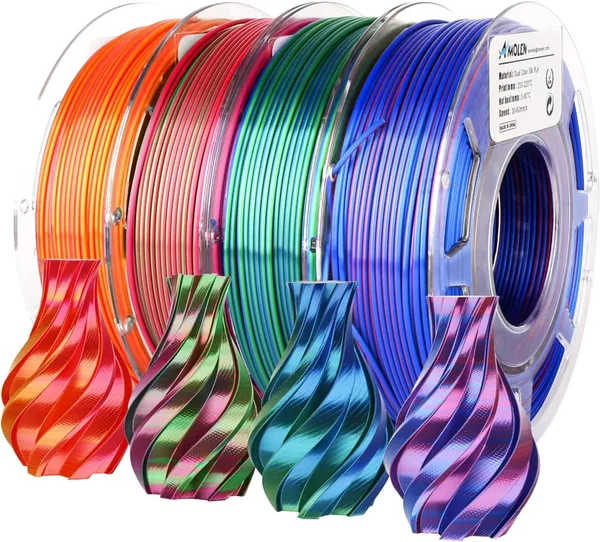
The direct competitor in spirit isn't another "wood" filament, but the silk lines in general, like AMOLEN Silk PLA: both bet on a visual effect with no post-processing, just a glossy metallic shine instead of wood. Choosing between them is a matter of taste and what interior or gift you're printing for. Wood PLA wins where you want a "warm," natural texture — gifts, home decor, things that should look handmade even if a printer made them in an hour.
If you need a part that has to withstand something — a bracket, a mount, a functional piece of a mechanism — wood filament loses out to regular PLA, or especially PETG. The wood particles slightly reduce impact strength compared to pure plastic, and such parts tend to crack along the grain rather than deform under stress. For decor that's not critical; for load-bearing parts, it's very critical.
The price doesn't bite too hard: overseas listings start around $20-21 per spool. For the full cost with shipping and import duty to your own country, check the landed price on dede.sh before ordering. That's in the same range as a decent regular PLA with some kind of special effect, so the markup for the "feature" is moderate, not exploitative.
Honest verdict
Worth buying if you're planning decor, gifts, figurines, vases — anything where texture and looks matter more than strength. Especially if you like the "handmade" aesthetic without actual manual sanding and painting.
Don't buy it if you need a functional, load-bearing part, or if your printer's nozzle is smaller than the standard 0.4mm and you're not willing to swap it. Also skip it if the printer sits in a poorly ventilated room — the smell during printing isn't for everyone, even though it doesn't bother me personally.
The trade-off is clear: you get an impressive texture with zero post-processing, but you lose a bit of strength and risk a clogged nozzle if you don't check its diameter beforehand. For decorative projects, that's more than a fair deal.
FAQ
Yes, this isn't a case where you need special equipment — the printer, temperatures, and print speed stay almost identical to regular PLA. The one thing to watch is nozzle diameter: standard 0.4mm or larger handles the wood particles fine, but thinner nozzles for miniatures are better swapped for brass ones, or you should just avoid this filament for fine detail work altogether.
Depends on the mood of the piece. Wood gives a warm, "natural" texture — great for vases, frames, decor in a rustic or Scandinavian style. Silk gives a glossy, almost metallic shine — better suited to modern, bold pieces. I'd go by the interior or the person you're printing the gift for, rather than the spec sheet.
For light, unloaded odds and ends, maybe. But for anything that actually bears weight or works under stress, I wouldn't risk it: the wood particles reduce impact strength somewhat compared to pure PLA, and the part is more likely to crack along the grain. For that kind of job, stick with regular PLA or PETG, and save Wood for decor.