ELEGOO PETG 1.75mm Black 1kg Review: Is It Worth Buying
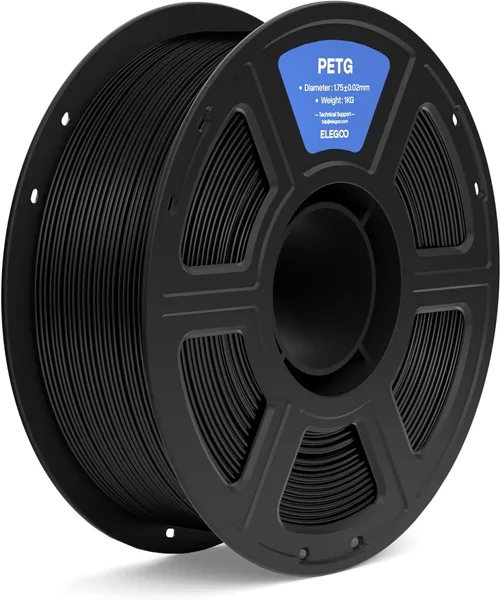
ELEGOO PETG Black 1.75mm is a no-drama, get-the-job-done filament for anyone who's grown a little tired of PLA's fragility. It prints consistently, shrugs off impacts and moisture far better than PLA, and strings a touch more than you'd like — but for the price, it's an honest buy, not a gamble.
There was a moment when the third PLA headphone stand I'd printed cracked after falling off a nightstand — maybe sixteen inches up. It didn't shatter, it snapped clean like a chocolate bar. That's when it finally clicked: for things that actually need to hold up — brackets, box lids, parts that sit out in the sun — PLA just isn't the material. You need something tougher, something less brittle. Enter PETG.
What this filament is and why not PLA
PETG belongs to the same family used for beverage bottles, just reworked for 3D printing. It's more flexible than PLA, handles heat much better (a hot kitchen in summer won't faze it, unlike some PLA prints that start to sag past 122°F), and — the big one — it's not brittle. Drop a part and it bends or scuffs instead of snapping in half.
ELEGOO PETG Black is a no-frills 1kg spool, black, matte finish. Nothing exotic here, and honestly, that's the point — when you buy PETG in 2026, you want predictability, not surprises.
How it actually prints
First impression: the spool is wound cleanly, no "bird's nests" hiding inside — the kind that even name-brand filament sometimes has, ruining the first couple meters of a print before you even realize something's wrong. It comes reasonably dry out of the box and picks up moisture more slowly than PLA, but don't get complacent — PETG is hygroscopic, and if you leave a spool open on a balcony for a month in winter, it'll start spitting and hissing mid-print.
Nozzle temp sits around 445-465°F, bed at 158-176°F with glue or a PEI sheet. At those settings the layers lay down evenly and the surface gets a light characteristic sheen — not as "plasticky" as PLA, not as matte as some ABS. Bed adhesion is good, sometimes too good — pulling the first few parts off bare glass without any adhesive can genuinely hurt, because PETG loves to weld itself down.
My main gripe with this material in general (not just this ELEGOO spool) is stringing. Those thin webs between sections of a model that you end up burning off with a lighter or trimming with a knife. This ELEGOO spool has it, at a moderate level, and it responds to retraction and speed tuning on fine details, but you never fully get rid of it — that's a property of PETG itself, not this particular brand. Anyone who claims they found a PETG with zero stringing is either lying or has a perfectly dialed-in profile and way too much free time.
Compared to what, and why bother
The obvious comparison is PLA, and the difference shows up immediately on functional parts: brackets, tool box lids, anything that lives outside or in a hot car in summer. PLA just deforms there. PETG holds its shape.
Compared against other PETG on the market — your typical eSUN or Sunlu — there's no dramatic behavioral difference; this isn't a material where the brand works miracles. The real difference is in spool diameter consistency and how evenly it's wound. ELEGOO does fine on both counts — I didn't hit a single jam or flow spike across the whole spool.
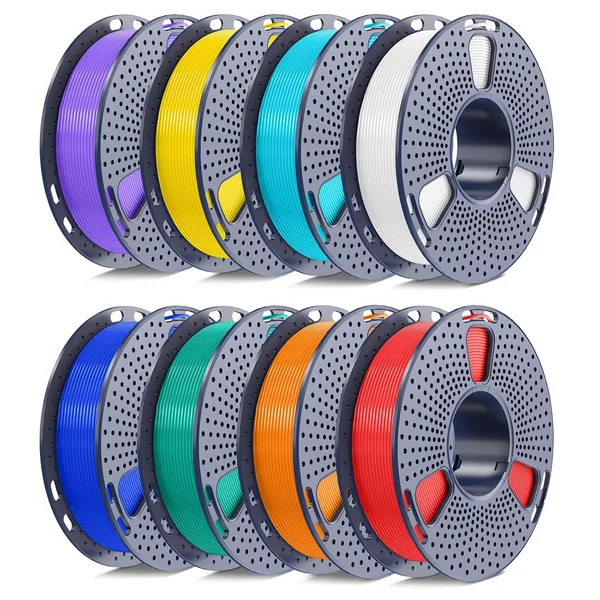
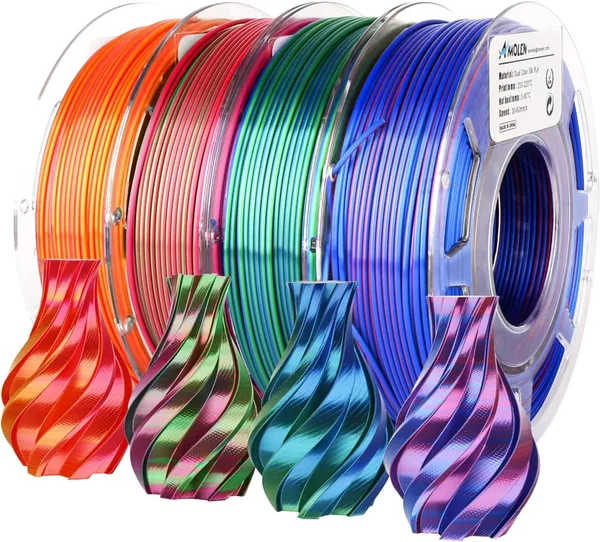
If what you actually want isn't strength but looks — display pieces, decorative items with a bit of shine — check out Amolen's silk PLA instead; it's a completely different story, softer and more colorful, but without PETG's heat resistance. And for everyday models where the main goal is not overpaying, it's worth a look at Sunlu's small PLA spool — a sensible pick if you don't need PETG yet.
Price and whether it's worth buying now
For the full landed price to your country — filament plus shipping and any import duty — check the live number on dede.sh. As of this review, it's a normal, even slightly below-average price for PETG in this class. At that price, I wouldn't hesitate.
Who should buy it, and who shouldn't
Buy it if you print functional parts: brackets, boxes, lids, anything that has to survive on a balcony or in a glove compartment. Buy it if you're sick of PLA prints snapping from an ordinary drop. Skip it if your printer has no heated bed above 140°F or no enclosure — PETG in a drafty room without proper bed heat will lift and warp at the corners. And skip it if you're expecting a perfectly glossy surface with zero stringing — no PETG delivers that, this one included.
FAQ
For your very first attempts, stick with PLA — it forgives sloppy settings, prints without a heated bed, and barely strings at all. Move to PETG once you actually understand what you're printing and why, and you need real durability.
For a single functional bracket or a small enclosure, yes, with room to spare. For a big organizer or several parts in a row, a kilogram disappears fast — budget roughly 25-30g per medium-sized part at 20% infill.
Yes, without one you won't get decent adhesion. 158-176°F is the sweet spot; below that, the first layer struggles to grip and corners tend to lift.
The chemistry and behavior are nearly identical across every decent manufacturer; the real difference is spool winding consistency and how well the packaging keeps moisture out. ELEGOO checks both boxes.
Bottom line: 3D printing has moved well past PLA toys, and this PETG is a genuinely solid tool for anyone who's graduated to functional parts. No fuss, no surprises, and for the price, it's worth buying.