Everlasting Comfort Memory Foam Seat Cushion Review: Worth It for an Office Chair?
A simple memory foam cushion that genuinely takes the pressure off your tailbone and hips after an hour or two of sitting, but it won't fix bad posture and it won't replace a real chair. Worth buying if you sit 8+ hours a day on a cheap chair and already feel your lower back going numb by mid-afternoon. Skip it if you already have a decent ergonomic chair, or if your pain is in your lower back rather than your tailbone.
You're sitting there in the evening after work, trying to figure out why it's not your back that hurts but some strange spot lower down — like someone's been pressing a finger into the exact same point all day. That's not your back. That's your tailbone, or more precisely the soft tissue around it, worn out from nine straight hours on a flat plastic seat or some thinly padded excuse for a cushion. Familiar story if you work from home on a kitchen chair, or in an office on a chair that was handed to you "temporarily" three years ago.
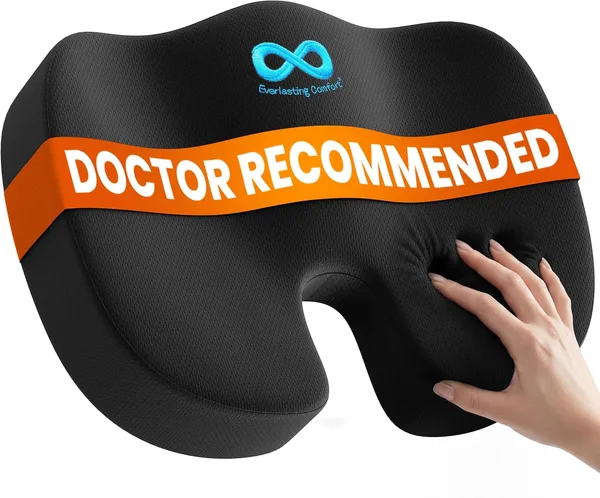
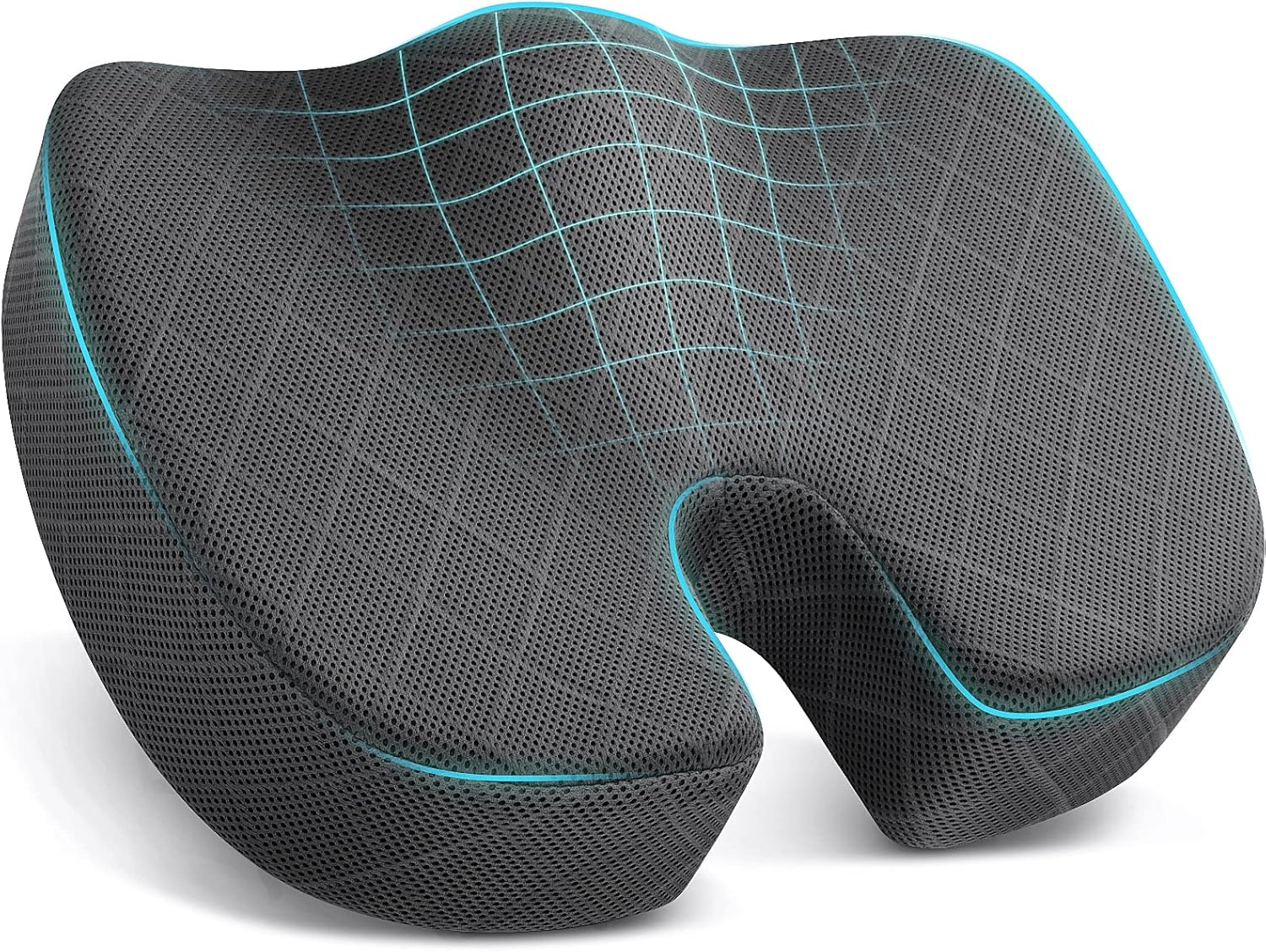
That's exactly the problem the Everlasting Comfort cushion was built for. Not posture, not lower-back pain — pressure from below. It has that familiar horseshoe shape: a cutout at the back for your tailbone, slightly raised edges so your hips don't slide forward. You've seen these orthopedic cushions sold in pharmacies at absurd prices, "doctor recommended" printed on every square inch of the box. Same basic idea here, just in a softer, everyday version.
What it's actually like to sit on
The first twenty minutes, nothing special happens. The foam is dense, with that memory-foam effect — it doesn't sink instantly, it gradually molds to your shape. And that's where the first catch shows up: if you're used to soft, sink-right-in seating, this thing will feel a bit firm at first. It holds its shape instead of collapsing, and your body needs a few days to adjust. By day three or four, the difference becomes obvious — the tailbone pressure that used to hit around 3pm now either doesn't show up at all, or waits until 6.
The main advantage is that cutout at the back. A lot of cheaper alternatives are just flat rectangular pads with no relief cut into them, and that works worse — the weight still concentrates in one spot. Here, your tailbone genuinely "floats," never touching the surface, while the load spreads across your sit bones and thighs. For anyone dealing with hemorrhoids, recovering from pelvic surgery, or just sensitive in that area, this is a real, tangible difference — not a marketing line.
What's annoying? The cover. It's removable and machine-washable — which is a good thing, because memory foam, as always, loves to trap odors and dust, especially in summer when it's hot and you're sitting on bare fabric in shorts. The other issue is size. This cushion isn't tiny — it's built for a "standard" chair or car seat, and on narrow office chairs with armrests, the edges sometimes rub against the arms. Small thing, but it's the kind of small thing that bugs you every single day.
Compared to a direct competitor like the TushGuard — same idea, also a horseshoe-shaped memory foam cushion for tailbone relief — the difference is honestly minimal. Both cushions do the same thing the same way. If you find one noticeably cheaper, just get that one; there's no meaningful gap between them. What actually matters is that the back cutout is a real functional cutout, not a cosmetic hint of one.
Who it's for, and who should skip it
If you already have a proper ergonomic office chair with real lumbar support and height adjustment, you probably don't need this cushion. It doesn't fix posture and it won't replace a good chair — it only smooths over one specific symptom, tailbone pressure. That's an important distinction sellers conveniently leave out of their "doctor recommended" copy.
But if you're sitting on a chair inherited from whoever rented the apartment before you, or on a kitchen stool because you've been working from home "temporarily" for two years now (sound familiar?), this is quick, cheap relief. It's also genuinely useful in a car for long drives — taxi drivers, delivery couriers, anyone spending hours behind the wheel tends to reach for exactly this kind of cushion rather than a pricier orthopedic seat overlay.
Rather than quoting a single price tag that won't mean much across different currencies and customs rules, check the full landed cost on dede.sh — item price, forwarding, and import duty rolled into one number for your country — before deciding. This isn't pocket change for a cushion, and compared with local pharmacy orthopedic cushions, the price difference doesn't always favor Everlasting Comfort. But the foam quality and the cutout design here are objectively better thought out than a typical pharmacy option at a similar price point.
Is this a must-have piece of office kit? No. Does it solve one specific, very common problem of sitting all day? Yes, and reliably so. I'd treat it as an inexpensive stopgap rather than a cure — something to use while you save up for a proper chair. And if your real problem isn't the chair at all but the fact that you never get up from the desk for hours on end, no cushion will fix that. What you need there is a timer and the habit of standing up every hour, not another accessory.
If the chair itself is the problem, not just the seat, it's worth looking at a proper ergonomic option instead — something like a mesh chair with lumbar support and an adjustable headrest. That's a different price category, but also a different level of comfort over the long haul.
FAQ
Mostly marketing. The cutout-for-tailbone shape is a genuinely sound idea and it's well executed here, but "doctor recommended" printed on a box doesn't mean an actual doctor examined your case. Judge the cushion by its shape and foam density, not by the label.
Functionally, they're the same. Both are horseshoe-shaped memory foam cushions. Get whichever one lands cheaper once shipping and duties to your country are factored in, or whichever has a longer warranty or a nicer removable cover.
For tailbone pressure — yes, noticeably better. For lower back or neck pain — no, that's a different anatomical issue entirely, and the cushion can't do anything about it. If it's your lower back that hurts, the problem is the chair or your posture, not what's underneath you.
Yes, and that's often where it's most useful — on long drives, a car seat rarely gives your hips proper support, and this cushion compensates for that quite well.